

Last Updated: November 2, 2026
Quick Summary
The best post workout recovery supplements in 2026 rebuild muscle protein, restore lost electrolytes, fill nutrient gaps, or calm training inflammation. Start with whey protein isolate and creatine monohydrate, then add electrolytes for long or hot sessions. Layer in BCAAs, magnesium, and omega-3s only as optional support.
- Whey protein isolate delivers 22 g of protein per two-scoop serving for muscle repair.
- Creatine monohydrate provides 5,000 mg per scoop and works best taken daily.
- Add electrolytes only if sessions run past an hour or your sweat is salty.
- Give each new supplement three to four weeks before judging whether it works.
- Add one product at a time so you know which one actually works.
Table of Contents
- What the Best Post Workout Recovery Supplements 2026 Actually Do
- Quick Comparison: Recovery Supplements at a Glance
- Post-Workout Protein Powder: The Base of Muscle Repair
- Creatine for Muscle Recovery and Training Adaptation
- Electrolytes for Workout Recovery and Rehydration
- Amino Acids, Magnesium, and Omega-3s: The Supporting Cast
- Dosing, Timing, and Who Should Skip Each Ingredient
- Building Your Recovery Stack at Bionic Supps
- Frequently Asked Questions
What the Best Post Workout Recovery Supplements 2026 Actually Do
The best post workout recovery supplements in 2026 do one of four things: they rebuild muscle protein, restore what sweat took out of you, top up a nutrient your diet misses, or calm the inflammation that hard training creates. That's it. Everything else on the shelf is marketing. This guide grades each ingredient on evidence, not hype.
Recovery is not a single process. It's a chain: muscle damage from training, then repair, then adaptation. Supplements help at specific links in that chain. Miss the basics, sleep and food, and no powder fixes it. Get the basics right and a few products genuinely accelerate the process.
Below, we'll show you exactly how we ranked these supplements and where each one earns its place.
How We Ranked These Supplements
We scored each ingredient on three criteria: evidence quality, practical dosing, and safety. A product that works at a realistic dose beats one that only shows benefits in studies using amounts nobody actually takes. We also asked whether the ingredient matters for your training type. A marathon runner and a powerlifter need different recovery support.
Watch out: the biggest mistake we see is buying five products at once and never knowing which one works. Add one at a time, give it three to four weeks, then judge.
Quick Comparison: Recovery Supplements at a Glance
Here's the short version before the detail. Each row answers one question: what does this product actually do for recovery?
| Supplement | Price | Main Role | Best For | Timing |
|---|---|---|---|---|
| Whey Protein Isolate | $49.90 | Muscle repair and growth | Anyone training hard | Within a couple of hours post-workout |
| Creatine Monohydrate | $33.90 | Strength and training adaptation | Lifters, team sport athletes | Any time, daily consistency matters |
| Electrolytes | Varies | Rehydration and fluid balance | Sweaty, long, or hot sessions | During and after training |
| BCAAs + Glutamine | $35.90 | Amino acid support | Dieting athletes, fasted trainers | Around training |
| Magnesium Glycinate | $26.90 | Muscle function and sleep support | People with low intake | Evening |
| Omega-3s | $24.90 | Inflammation support | Most adults | With a meal |
Post-Workout Protein Powder: The Base of Muscle Repair
Protein is the one recovery supplement with near-universal agreement behind it. Muscle repair depends on muscle protein synthesis, and that process needs amino acids delivered in adequate amounts.
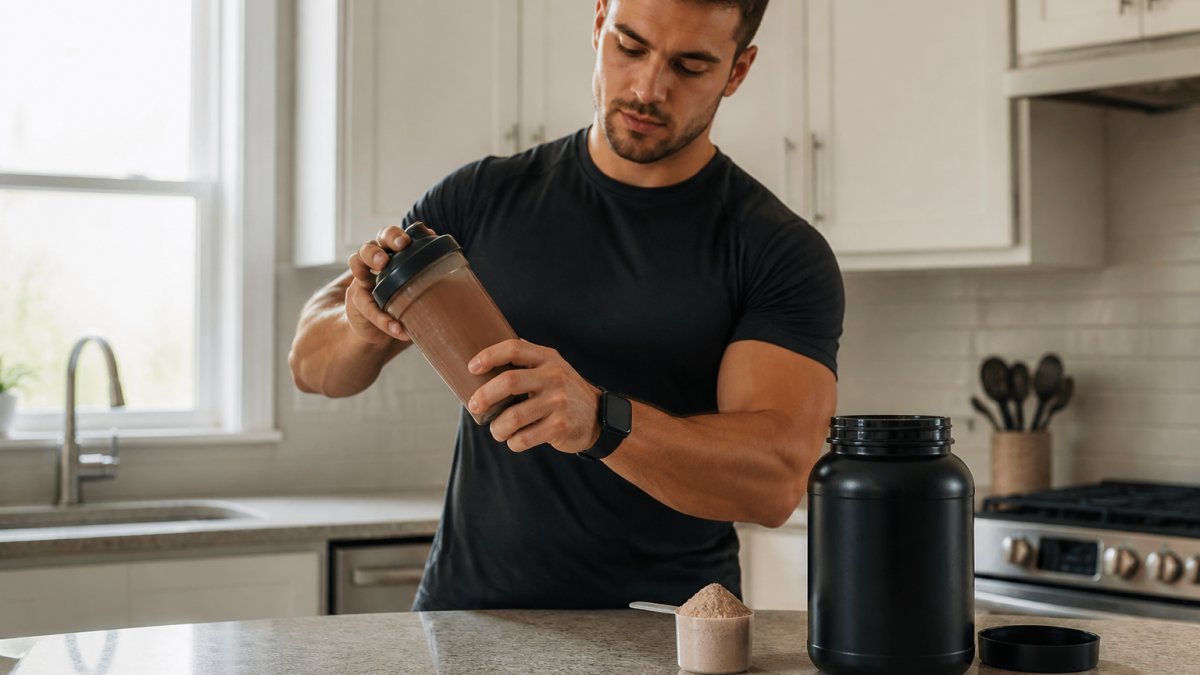
Our Advanced 100% Whey Protein Isolate delivers 22 g of protein per two-scoop serving, in vanilla or chocolate. It contains milk, so it isn't for anyone avoiding dairy.

Best for: lifters and athletes who struggle to hit daily protein from food alone. Skip if: you already eat enough protein across your meals, or you avoid dairy.
Creatine for Muscle Recovery and Training Adaptation
Creatine monohydrate is the most studied sports supplement in existence, and its recovery value is indirect but real. It supports strength and training adaptation, which means you recover to a higher baseline and handle more work over time. It doesn't numb soreness. It raises your capacity.
Our Creatine Monohydrate provides 5,000 mg per one-scoop serving, 50 servings per tub. It is a single-ingredient product.

Best for: anyone chasing strength, power, or repeated high-intensity efforts. Skip if: you have kidney concerns. Talk to your doctor first.
Electrolytes for Workout Recovery and Rehydration
Electrolytes for workout recovery matter most when you sweat heavily, train long, or train in heat. Sodium, potassium, and the rest are lost in sweat, and hydration status affects how you feel and perform the next day. For a 45-minute gym session in air conditioning, water is usually enough.
The rule we give customers: if your skin and clothes are salty after training, or your session runs past an hour, add electrolytes. Otherwise, spend the money on protein and creatine first.
Amino Acids, Magnesium, and Omega-3s: The Supporting Cast
These three earn a place, but as support rather than foundation. Get protein, creatine, and hydration right before adding them. The bigger issue is evidence quality: some of these ingredients have solid research behind them, and some are popular mostly because the marketing is good. Here is how each one actually stacks up.
BCAAs and Glutamine: Popular, but Often Redundant
Branched-chain amino acids (leucine, isoleucine, and valine) do stimulate muscle protein synthesis, and leucine is the key trigger. The catch is that if you already eat enough protein, extra BCAAs add little.
A practical dose is 4-6 g of BCAAs in a 2:1:1 ratio around training. Our BCAA Post Workout Powder supplies 4,000 mg of BCAAs in a 2:1:1 ratio plus 1,000 mg of L-glutamine per half-scoop, in honeydew or watermelon.

Glutamine is the more uncertain of the two.
Evidence grade: BCAAs, moderate for fasted or low-protein scenarios, low when protein intake is adequate. Glutamine, low for recovery outcomes.
BCAA Post Workout Powder (Honeydew/Watermelon) →
Magnesium Glycinate: A Nutrient Gap Filler, Not a Recovery Drug
Our Magnesium Glycinate provides 275 mg of elemental magnesium per three-capsule serving, taken in the evening. People with kidney disease should not take magnesium without medical advice, and magnesium can interfere with certain antibiotics and thyroid medications, so check with a pharmacist if you take prescriptions.
Evidence grade: moderate for correcting low intake and supporting sleep quality; low for direct soreness reduction in well-fed athletes.
Omega-3 Fatty Acids: Inflammation Support With a Real Dose Threshold
Our Omega-3 softgels deliver 180 mg EPA and 120 mg DHA per capsule, sourced from sardines and anchovies.
If you take blood thinners or have a bleeding disorder, ask your doctor before adding them. People with fish allergies should avoid fish-oil products.
Evidence grade: moderate for inflammation and joint comfort; low-to-moderate for direct muscle soreness.
Dosing, Timing, and Who Should Skip Each Ingredient
Dose and timing decide whether a supplement works. The table below is the version we'd write on an index card, followed by the details that matter more than the numbers.
| Ingredient | When | Skip If |
|---|---|---|
| Whey isolate | Post-workout or between meals | Dairy allergy |
| Creatine monohydrate | Any time, every day | Kidney conditions without medical advice |
| Electrolytes | During and after long or hot sessions | You train short and sweat little |
| BCAAs | Around fasted or dieting training | You hit protein targets from food |
| Magnesium glycinate | Evening | You take certain antibiotics; check with a pharmacist |
| Omega-3 | With a meal | You take blood thinners; ask your doctor |
Consistency Beats Perfect Timing
The most common mistake is obsessing over the post-workout window. For protein, a dose within a couple of hours of training is fine, and total daily protein matters more than the exact minute you drink it.
For magnesium, evening dosing fits because it may support sleep quality. For omega-3s, taking them with a meal that contains fat improves absorption. For electrolytes, the trigger is sweat loss, not the clock.
How Long Before You Judge a Supplement
Give each new supplement three to four weeks before deciding. Protein is different: it works meal by meal, so judge it on whether it helps you hit your daily target, not on a subjective soreness score.
Safety, Interactions, and Who Should Avoid What
Supplements are not risk-free, and the label does not always tell you what you need to know.
- Protein powder: check for milk, soy, or gluten if you have allergies. People with kidney disease should discuss protein intake with their doctor.
- Creatine: generally well tolerated, but people with kidney conditions should get medical advice first. It can cause mild water retention.
- Electrolytes: people with high blood pressure or heart conditions should watch sodium content and check with their doctor.
- Magnesium: can interact with antibiotics, thyroid medication, and some diuretics. People with kidney disease should avoid supplemental magnesium without medical advice.
- Omega-3s: can thin the blood at high doses; ask your doctor if you take blood thinners or have a bleeding disorder.
- BCAAs: generally safe, but unnecessary if you eat enough protein. People with certain metabolic conditions should check with a clinician.
Pregnant or breastfeeding people, younger athletes, and anyone on prescription medication should talk to a healthcare provider before adding any supplement.
Third-Party Testing and Contamination Risk
Look for products that carry third-party certification if you are subject to drug testing. A product that lists every ingredient and its dose on the label is easier to evaluate than a proprietary blend. If a label hides doses behind a blend, assume the amounts are small until proven otherwise.
Building Your Recovery Stack at Bionic Supps
Start with the two products that carry the most evidence: protein and creatine. Add electrolytes if your training is long or hot, then layer in aminos, magnesium, and omega-3s as budget and diet allow. That order matters more than any single brand claim.
Every product page shows the full label, ingredients, serving size, and directions, so you can check the dose before you buy.
Frequently Asked Questions
Do post-workout supplements actually help with recovery?
Some do, and the evidence is uneven. Protein and creatine monohydrate have the strongest support for muscle repair, strength, and training adaptation. Electrolytes matter mainly when you sweat heavily or train long. BCAAs, glutamine, and most plant extracts have weaker or mixed evidence. Treat any recovery supplement as support for sleep, food, and hydration, not a replacement for them. Buy single-ingredient products where you can so you know exactly what dose you are getting.
Should you take protein or creatine after a workout?
You can take both, and timing matters less than consistency. Protein is worth having within a couple of hours of training, . Creatine works through saturation, so a daily 5,000 mg serving matters more than taking it at a specific minute. Pairing the two covers muscle protein synthesis and strength adaptation without overlap in how they work.
What should you look for in the best muscle recovery supplements?
Start with the dose on the label, not the front of the tub. Check that protein lists grams per serving, creatine lists 5,000 mg of creatine monohydrate, and magnesium lists elemental magnesium rather than the total compound weight. Look for single-ingredient formulas, full Supplement Facts panels, and clear allergen notes. Skip proprietary blends that hide doses, and check for third-party testing if you compete or are subject to drug testing.
How soon after a workout should you take a recovery supplement?
Protein is the one with a clock on it. Aim to eat or drink 20 to 40 g of protein within about two hours of finishing, which is a comfortable window rather than a race. Creatine can go any time of day as long as you take it daily. Electrolytes are best sipped during and right after long or hot sessions. Magnesium and omega-3s are daily habits, so take them with a meal whenever you will remember them.
Are electrolytes for workout recovery necessary if you only train for an hour?
Usually not. A one-hour session in a normal gym, with normal sweating, is covered by water and your regular meals. Electrolytes for workout recovery earn their place in long sessions, hot conditions, heavy sweat rates, or back-to-back training days. If your skin or clothes are crusted with salt after training, or you finish with a headache and heavy legs, a drink mix with sodium is a reasonable addition.
Recovery rewards consistency, not novelty. Pick a small stack, run it for a month, and judge it on how you train and sleep. Bionic Supps stocks single-ingredient creatine, whey isolate, BCAAs, magnesium glycinate, and omega-3s with full labels and free U.S. shipping on orders of $50 or more. Get started with Bionic Supps and build a recovery routine you can actually stick to.
