

Quick Summary
The best pre-workout for focus without jitters is usually one with a moderate or no caffeine dose plus non-stimulant ingredients like L-theanine, choline and phosphatidylserine. Jitters come mainly from total stimulant load, so start with half a serving and read the full Supplement Facts label.
- Jitters tend to appear above an individual threshold, which varies with body weight, tolerance, sleep and empty-stomach dosing.
- A 200 mg caffeine serving is close to the caffeine in roughly two cups of brewed coffee.
- Start with half a serving of any new caffeinated product and treat the first week as calibration.
- Avoid stacking coffee, energy drinks or a second caffeinated product on top of a pre-workout.
- Take a caffeinated pre-workout about 30 to 45 minutes before training and avoid late-day doses.
Table of Contents
- How Pre-Workout Jitters Happen and What Actually Helps Focus
- Best Non-Stim Pre-Workout Options From Bionic Supps
- Caffeine-Free Pre-Workout for Focus: What to Look For
- Energy Powder vs Brain & Focus Formula: Caffeine, Doses and Price
- How to Avoid Pre-Workout Jitters Without Losing Focus
- Best Pre-Workout for Focus and Pump: Matching a Product to Your Training
- Choosing Your Focus Stack Before Your Next Workout
- Frequently Asked Questions
How Pre-Workout Jitters Happen and What Actually Helps Focus
Last Updated: November 21, 2026
Most people who search for the best pre workout for focus without jitters are trying to solve the same problem: they want sharp attention in the gym but do not want a racing heart and shaky hands halfway through their first set. The good news is that focus and jitters are not the same thing, and a well-chosen formula can separate them.
Jitters are a dose-and-sensitivity problem, not a moral failing of the formula. Caffeine works mainly by blocking adenosine receptors in the brain, which reduces the feeling of tiredness and raises alertness (The Neurophysiology of Caffeine as a Central Nervous System Stimulant and the Resultant...). At the same time, it increases sympathetic nervous system activity, which is why a high dose can produce a faster heart rate, restlessness, shaky hands, a tight chest, and the feeling that your thoughts are racing faster than your set. The effect is not linear: a 100 mg dose and a 300 mg dose do not feel like one-third and one times the same experience.
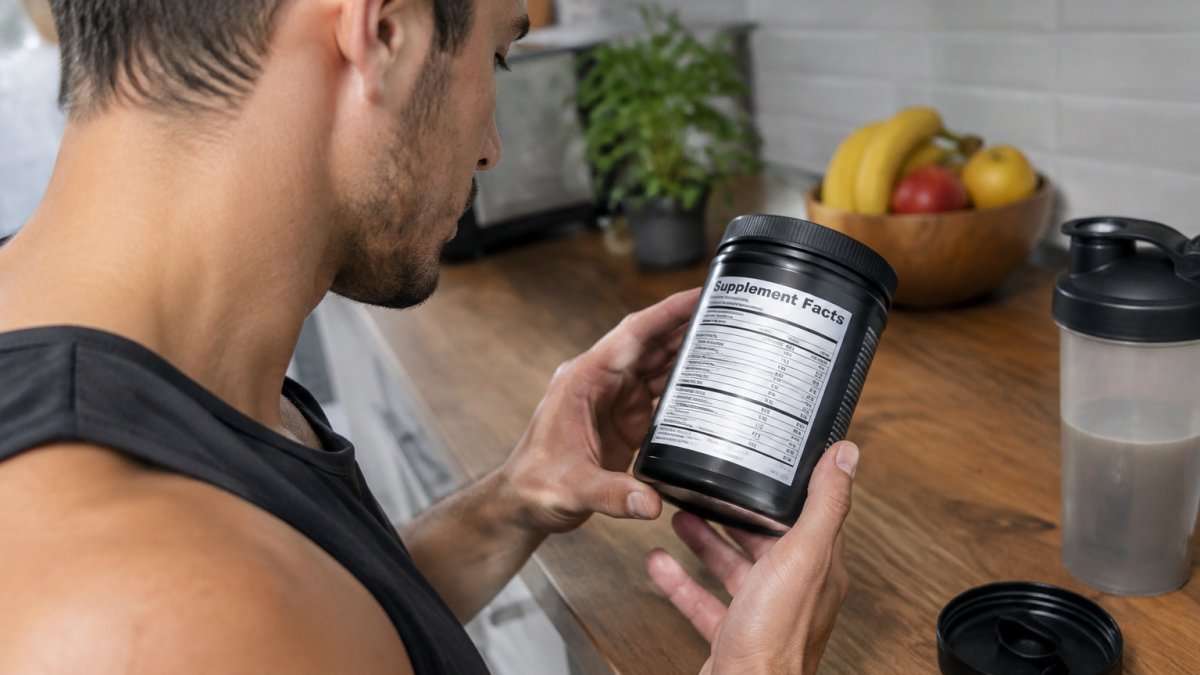
A useful way to think about it is total stimulant load, not just the scoop. A pre-workout with 200 mg of caffeine per serving is already close to the caffeine in roughly two cups of brewed coffee, and stacking a coffee, an energy drink, or a second scoop on top of that is the most common route to overstimulation. Some formulas also add other stimulants or stimulant-like ingredients, such as green tea extract, guarana, or yohimbine, which can compound the effect even when the caffeine number looks moderate. Read the full Supplement Facts panel, not just the caffeine line.
Focus, by contrast, depends on more than stimulation. Hydration, sleep, meal timing, and the ingredients in a formula all play a role. A pre-workout that relies on a moderate caffeine amount and adds non-stimulant ingredients often produces a steadier, less frantic kind of concentration. The non-stimulant ingredients worth knowing are choline (often as choline bitartrate or citicoline), L-theanine, phosphatidylserine, bacopa, and DHA. L-theanine is the one most lifters associate with smoothing out caffeine's edge, and it is commonly paired with caffeine in the 100-200 mg range per serving. Choline and phosphatidylserine are associated with cognitive support, while bacopa is traditionally used for memory and calm focus. These are plausible mechanisms, not guarantees, and the dose and form matter more than the marketing name on the label.
Watch out: do not assume "non-stim" means "no effect." Ingredient responses vary, and the full Supplement Facts label should guide your decision. If you take prescription medication, have a heart condition, are pregnant or nursing, or are sensitive to stimulants, talk to a clinician before adding any caffeinated pre-workout.
Best Non-Stim Pre-Workout Options From Bionic Supps
If your goal is focus without the jitter, a non-stim approach is worth a close look. The Brain & Focus Formula from Bionic Supps is a capsule supplement at $39.90 for a 30-serving container, with 2 capsules per serving. It combines vitamins and minerals with choline and a blend that includes bacopa, green tea extract, DMAE, phosphatidylserine, and DHA. Note that it contains soy and fish (tuna), and its label includes an iron warning you should read before use.
Watch out: do not assume "non-stim" means "no effect." Ingredient responses vary, and the full Supplement Facts label should guide your decision.
Caffeine-Free Pre-Workout for Focus: What to Look For
When you compare options, start with the label. Check the caffeine content per serving, the full list of ingredients, and any allergen statements. Look for clear serving sizes and directions so you can dose consistently. Transparent labeling matters more here than marketing claims about focus.
If you are caffeine-sensitive, a caffeine-free formula removes the main variable that drives jitters. Pair that with a sensible training warm-up, adequate water, and a meal a few hours before lifting, and you will often notice steadier concentration without the nervous system overdrive.
Focus Ingredients Beyond Caffeine
Caffeine is not the only ingredient that supports attention. The Brain & Focus Formula draws on choline, green tea extract, and phosphatidylserine, among others, which are commonly associated with cognitive function. Read the full ingredient list to understand what each product contains rather than relying on general claims. These statements have not been evaluated by the Food and Drug Administration, and no product is intended to diagnose, treat, cure, or prevent any disease.
Energy Powder vs Brain & Focus Formula: Caffeine, Doses and Price
Here is how two popular Bionic Supps options compare on the details that matter most for focus and jitters:
| Product | Format | Caffeine | Serving | Price | Best For |
|---|---|---|---|---|---|
| Energy Powder (Fruit Punch) | Drink mix | 200 mg per 2-scoop serving | 2 scoops (7 g), 20 servings | $34.99 | Lifters who want a caffeine-driven push |
| Brain & Focus Formula | Capsules | Not a caffeine product (blend includes green tea extract) | 2 capsules, 30 servings | $39.90 | Cognitive support without a stimulant-heavy powder |
Energy Powder (Fruit Punch), you can view the Fruit Punch Energy Powder's caffeine information and directions directly.
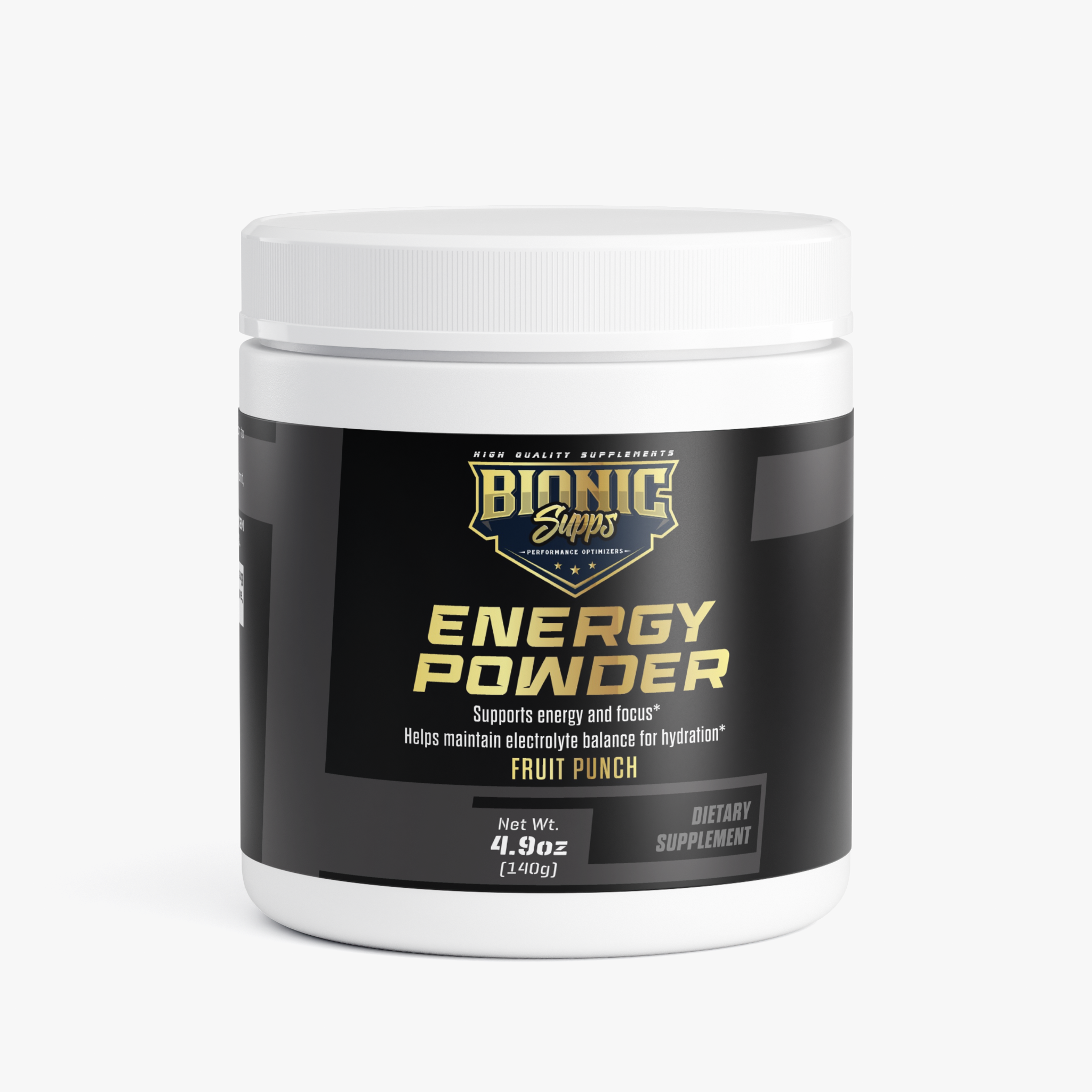
- Pros: Clear caffeine amount per serving (200 mg), fruit-punch flavor, contains L-theanine, taurine, B vitamins, and minerals.
- Cons: 200 mg is a meaningful dose, so it can cause jitters in caffeine-sensitive users. It contains sucralose.
Brain & Focus Formula
- Pros: Capsule format, no powder-driven caffeine spike, broader cognitive ingredient profile.
- Cons: Contains soy and fish, and the iron warning applies. It is not designed as a fast pre-workout stimulant.
How to Avoid Pre-Workout Jitters Without Losing Focus
The most effective approach is usually a combination of dose control, timing, food, and honest self-assessment. Use this as a decision framework rather than a single rule.
Step 1: Establish your caffeine baseline. Before you touch a pre-workout, know roughly how much caffeine you already take in a day from coffee, tea, soda, and energy drinks. A common pattern is one to two cups of coffee in the morning, which is roughly 95-190 mg of caffeine. If you are already near 200-300 mg before training, a 200 mg pre-workout is a large addition, not a small one. Start with half a serving of any new caffeinated product and treat the first week as a calibration period.
Step 2: Choose the lowest effective dose, not the full scoop. If the label lists 200 mg of caffeine per two-scoop serving, one scoop is 100 mg, a reasonable starting point for many people. Measure with the scoop that came with the product, not a kitchen tablespoon, because scoop volumes vary between brands.
Step 3: Time it against your training and your sleep. Take a caffeinated pre-workout roughly 30 to 45 minutes before training so the peak lines up with your first working sets. Caffeine's effects can last for several hours after a dose, so late-day use can affect sleep (the CDC). If you train in the evening, a 200 mg dose at 7 p.m. can still be active at midnight.
Step 4: Eat and hydrate deliberately. Taking a caffeinated powder on an empty stomach tends to hit faster and harder. A meal or snack with some carbohydrate and protein a few hours before training, plus steady water intake through the day, often produces a smoother response. Dehydration alone can mimic jitters, a fast heart rate and a foggy head, so rule that out before blaming the formula.
Step 5: Do not stack stimulants by accident. Avoid adding coffee, energy drinks, or a second caffeinated product on top of a pre-workout. Also check for stimulant-like ingredients such as green tea extract, guarana, or yohimbine in other products you take, including fat burners and focus capsules. Two moderate products can add up to an overstimulated session quickly.
Step 6: Track the outcome, not the feeling. Define focus in practical terms: did you complete your planned sets, did your rest periods stay consistent, did your form hold on the last rep, and did you feel calm between sets rather than wired? A simple note on your phone after each session, dose, timing, food, sleep, and a one-to-ten focus rating, will tell you more over two weeks than any single workout will.
Watch out: if you feel chest pain, an irregular heartbeat, severe anxiety, or faintness after a pre-workout, stop the product and seek medical advice rather than adjusting the dose on your own.
Best Pre-Workout for Focus and Pump: Matching a Product to Your Training
The right choice depends on what you are training for. If your priority is sharp attention on heavy or technical lifts, the Brain & Focus Formula suits a non-stim approach. If you want a noticeable energy lift for high-intensity sessions and tolerate caffeine well, the Energy Powder fits better.
Pump-focused users should read directions carefully and avoid overlapping ingredients across products. Using two stimulant-containing products together increases the risk of jitters quickly.
Choosing Your Focus Stack Before Your Next Workout
Build your routine in small steps. Pick one product, use the listed serving, and track how you feel over the first few sessions. Note your energy, concentration, and any restlessness. If jitters appear, reduce the dose or switch to a non-stim option before adding anything new.
Keeping the stack simple is a sensible approach: one focus-oriented product, consistent sleep, and steady hydration are easier to assess than several stacked stimulants. Explore the Brain & Focus Formula and the Energy Powder on our site, read the full labels, and choose the option that matches how your body responds.
Get a steadier, more focused workout with Bionic Supps. Our Brain & Focus Formula and Energy Powder come with full Supplement Facts labels, clear serving sizes, and directions so you can choose with confidence.
Frequently Asked Questions
Is there a pre-workout that doesn't make you jittery?
Yes. Caffeine-free and low-stimulant pre-workouts avoid a high caffeine dose, which is one common contributor to jitters. Bionic Supps' Brain & Focus Formula is a capsule with no caffeine listed among its key blend ingredients, and it contains bacopa, green tea extract, DMAE, phosphatidylserine and DHA. If you still want an energy drink-style mix, the Energy Powder (Fruit Punch) contains 200 mg of caffeine per two-scoop serving, so start with a half serving to test your tolerance before committing to a full dose.
What is the best pre-workout for focus?
The right pre-workout for focus depends on whether you want caffeine. For a stimulant-based mix, Energy Powder (Fruit Punch) at $34.99 delivers 200 mg of caffeine per two-scoop serving from green tea, along with L-theanine, which many people use to smooth the caffeine edge. For a non-stimulant option, Brain & Focus Formula at $39.90 is built around botanicals and nutrients chosen for cognitive support rather than stimulation. Compare the serving size and caffeine amount on each Supplement Facts label before deciding.
Can a caffeine-free pre-workout help with focus?
A caffeine-free pre-workout can support focus through ingredients other than caffeine, but expect a gentler effect than a stimulant mix. Brain & Focus Formula includes ingredients such as bacopa, phosphatidylserine and DHA. Results vary by person, and this product has not been evaluated by the Food and Drug Administration and is not intended to diagnose, treat, cure or prevent any disease. Track how you feel over two to three weeks before judging it.
How can I avoid jitters from pre-workout?
Start with a smaller dose, take your pre-workout at least 30 to 60 minutes before training rather than on an empty stomach right before you lift, and avoid stacking it with other caffeine from coffee or tea. The Energy Powder contains 200 mg of caffeine in a full two-scoop serving, so testing a half serving first lets you find your personal limit. Also check total daily caffeine intake, since sleep disruption from late-day doses often makes next-day focus feel worse.
