

Table of Contents
- Creatine Monohydrate vs Creatine HCL: What the Evidence Shows
- Performance and Muscle Growth Outcomes
- Solubility, Mixability, and Digestive Comfort
- Creatine Loading Phase: What to Do and How to Adjust
- Creatine Side Effects: Water Retention, Bloating, and Safety
- Best Time to Take Creatine and How to Choose Your Form
- Cost and Product Quality: What to Verify Before Buying
- Conclusion: Which Creatine Form Fits Your Goals
- Frequently Asked Questions
Last Updated: October 9, 2026
Creatine Monohydrate vs Creatine HCL: What the Evidence Shows
Creatine monohydrate vs creatine HCL is the comparison that decides most supplement purchases, and the honest answer is that monohydrate wins on evidence while HCL wins on marketing. This guide from Bionic Supps breaks down what each form actually is, what the research supports, and how to pick the one that fits your goals.

Creatine monohydrate is the single-ingredient form of creatine bound to a water molecule. Creatine hydrochloride (HCL) is creatine bound to hydrochloric acid, which manufacturers claim improves solubility and reduces stomach upset.
Both forms deliver the same active compound: creatine. That matters because creatine works by saturating your muscles, not by being exotic. The form affects how it dissolves and how it feels going down. It does not change what creatine does once it is inside your body.
How the Two Forms Differ
The difference comes down to chemistry, not magic. Monohydrate attaches creatine to a water molecule, giving you a stable powder that has been studied for decades. HCL attaches creatine to hydrochloric acid, producing a compound that dissolves more readily in water.
That solubility difference is real. What is not established is whether it translates into better strength, more muscle, or fewer side effects at a matched dose. A form that dissolves faster still has to deliver the same creatine to your muscles.
Direct, Dose-Matched Head-to-Head Evidence
Here is the gap most comparison articles skip: there is very little direct, dose-matched research pitting monohydrate against HCL. The evidence base for monohydrate is deep and consistent. The evidence base for HCL is thin by comparison.
When you see a claim that HCL is "more bioavailable," ask what study measured it against an equal dose of monohydrate. Usually, the answer is none. That does not make HCL useless. It means the burden of proof sits with the newer, pricier form.
Performance and Muscle Growth Outcomes
For strength and muscle growth, monohydrate is the form with the research behind it. Creatine supplementation raises phosphocreatine stores in your muscles, which supports ATP production during short, intense efforts like heavy sets and sprints.
That mechanism is why creatine helps with resistance training performance and, over time, lean body mass and body composition. The catch is that these outcomes come from creatine itself, not from the delivery format. If HCL delivers the same creatine to your muscles, it should produce the same result. Nobody has convincingly shown otherwise.
What most guides miss is that form is a rounding error next to consistency. Taking 5 g daily for months beats taking a fancy form twice a week.
Solubility, Mixability, and Digestive Comfort
HCL does dissolve more easily, and that is its strongest practical selling point. If you have ever watched monohydrate powder settle at the bottom of a shaker, you understand the appeal of a form that mixes clean.
Monohydrate's mixability is a solved problem, though. Stir it into warm water, shake it longer, or add it to a smoothie. Grittiness is an inconvenience, not a limitation.
Digestive comfort is where claims outrun evidence. Some users report less bloating on HCL, but without dose-matched trials, it is hard to separate the form from the dose, the timing, or the person. If monohydrate upsets your stomach, the standard troubleshooting is a smaller serving, taken with food, split across the day.
Creatine Loading Phase: What to Do and How to Adjust
A creatine loading phase is a short period of higher daily intake used to saturate your muscles faster. The classic approach is roughly 20 g per day split into four servings for about a week, then dropping to a maintenance dose of 3 to 5 g daily.
You do not have to load. Taking 3 to 5 g every day gets you to the same place in a few weeks, just more slowly. Loading is a shortcut, not a requirement.
With HCL, many users take smaller amounts because the label suggests it. That is fine as long as you understand you are still aiming for muscle saturation, not a smaller target. Whichever form you choose, the goal is the same: fill the tank and keep it topped up.
Creatine Side Effects: Water Retention, Bloating, and Safety
Creatine side effects are mild for most people and center on water retention, minor bloating, and occasional stomach upset. The weight gain people notice early is usually water drawn into muscle, not fat.
Long-term use has a solid safety record in healthy adults at standard doses. If you have kidney concerns or take medication, talk to your doctor before starting, because creatine is processed through the kidneys.
HCL's claim to fewer side effects is plausible but not proven. Water retention is a function of creatine saturation, so switching forms is unlikely to change it. Hydration matters more than form here: drink enough water, especially on training days.
Best Time to Take Creatine and How to Choose Your Form
The best time to take creatine is whenever you will actually remember it. Timing is far less important than consistency, though taking it with a meal or a carb-containing drink may help uptake slightly.
Choosing your form comes down to three questions:
| Your Situation | Better Fit | Why |
|---|---|---|
| Budget-conscious, wants proven results | Monohydrate | Most evidence, lowest cost per serving |
| Hates gritty texture, will pay more | HCL | Dissolves more easily |
| Sensitive stomach on full doses | Either, dosed smaller | Split servings and take with food |
| New to creatine | Monohydrate | Simplest, best-studied starting point |
For most people, monohydrate is the sensible default. HCL is a reasonable pick if mixability is your main gripe and you accept the thinner evidence.
Cost and Product Quality: What to Verify Before Buying
Cost per evidence-supported daily dose is the metric that matters, and monohydrate wins it comfortably. The reason is simple: monohydrate is a commodity ingredient produced at scale, while HCl requires an additional manufacturing step that raises the price without a demonstrated performance return.
Here is how to run the math yourself instead of trusting a price tag:
- Find the creatine per serving. A label should state the exact milligrams of creatine monohydrate or creatine HCl per scoop. If it only lists "a proprietary blend," walk away.
- Find the servings per container. Divide total creatine by the per-serving amount, or read the stated serving count.
- Divide the container price by the number of effective daily doses. For monohydrate, that is typically 3-5 g per day at maintenance. For HCl, many labels suggest a smaller scoop, so check whether the smaller scoop still delivers a meaningful amount of creatine or just a smaller dose of the same molecule.
- Compare monthly cost, not container cost. A cheap container with 20 servings can cost more per month than a pricier one with 60.
A common pattern is that monohydrate lands in the range of a few cents to roughly a dime per 5 g dose depending on brand and format, while HCl frequently runs several times that per equivalent creatine dose. The exact numbers move with the market, so calculate from the label in front of you rather than from a general figure.
Quality is where you should spend your attention, because creatine is a commodity powder and label accuracy varies across the market. Before buying any form, verify:
- Exact creatine amount per serving is stated, not hidden in a blend.
- Serving size and servings per container are listed so you can compute cost per dose.
- A full supplement facts panel is published, not just a marketing graphic.
- Third-party testing is disclosed. Independent testing programs verify identity, potency, and freedom from contaminants like heavy metals, relevant because creatine is mined and processed in bulk. Look for a certificate of analysis or a testing-program seal, and understand that a seal is a starting point, not a guarantee.
- Ingredient transparency, no undisclosed fillers, and no claims that a form is "pharmaceutical grade" without documentation.
Be skeptical of claims that a specific form is "purer" or "more absorbable" without a lab result or a cited study behind it. Purity is a property of the finished product and its testing, not of the molecule's name.
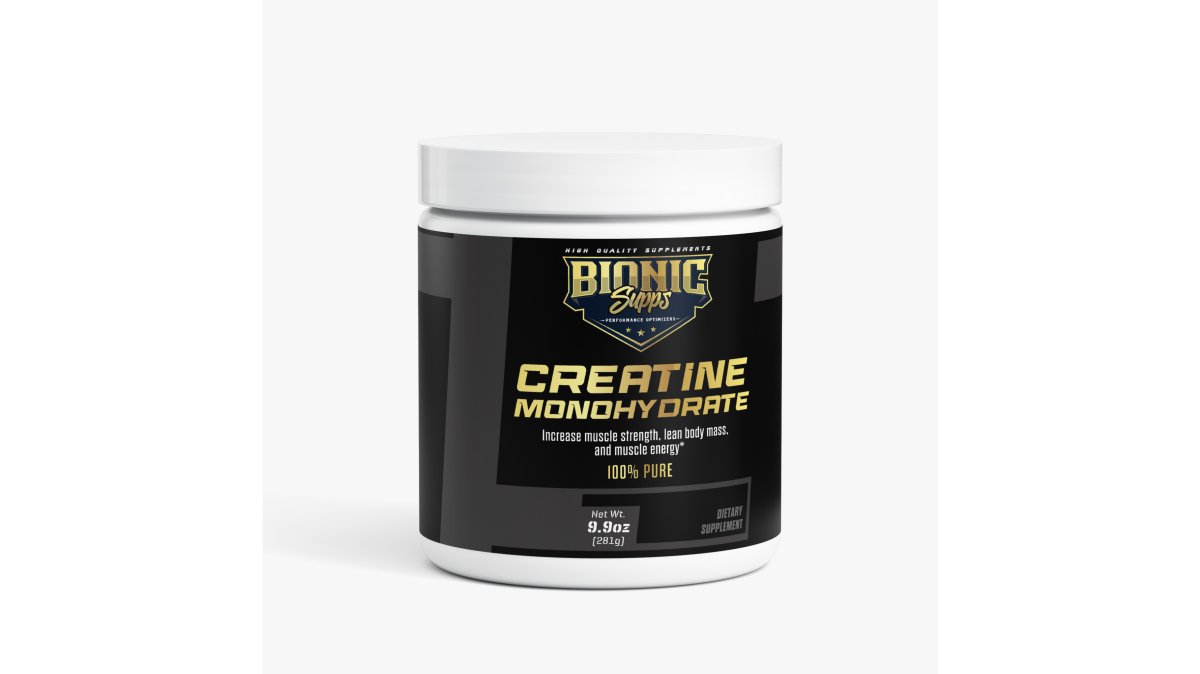
At Bionic Supps, our Creatine Monohydrate delivers 5,000 mg of creatine monohydrate per scoop, with 50 servings per container and the full label published on the product page. That transparency is the standard we hold every product to, and it is the first thing to check before you buy any form.
Conclusion: Which Creatine Form Fits Your Goals
The creatine monohydrate vs creatine HCL decision is simpler than the marketing suggests. Monohydrate has the evidence, the track record, and the better cost per serving. HCL has better mixability and a thinner research base.
If you want the form with the most support behind it, choose monohydrate and focus on taking it daily. If gritty texture is a dealbreaker, HCL is a defensible choice as long as you know what you are paying for.
Frequently Asked Questions
Does creatine HCl make muscles bigger than monohydrate?
No direct evidence shows creatine HCl builds more muscle than monohydrate. Both forms work by raising muscle creatine stores, which supports strength and lean mass gains when paired with resistance training. Monohydrate has decades of clinical research behind it, while HCl has far fewer human trials. If your goal is muscle growth, monohydrate remains the most studied and reliable choice.
Is it okay to switch from creatine HCl to monohydrate?
Yes, switching is safe. Both forms deliver creatine to your muscles; the main difference is dose and cost. If you switch, aim for 3 to 5 grams of monohydrate daily. You do not need to reload if you have been taking HCl consistently, but a short loading phase of 20 grams per day for 5 to 7 days can saturate muscles faster if you want quicker results.
Does creatine HCl cause less bloating than monohydrate?
Some users report less bloating with HCl, but research has not confirmed a clear advantage. Monohydrate can cause water retention inside muscle cells, which is not the same as subcutaneous bloating. If you experience stomach upset with monohydrate, try splitting your daily dose or taking it with food. HCl's smaller serving size may feel easier on the stomach for some people, but evidence is limited.
Who should not take creatine HCl or monohydrate?
People with pre-existing kidney or liver conditions should talk to a doctor before using any creatine supplement. Those taking prescription medications, including citalopram, should also check for interactions. Creatine is generally well tolerated in healthy adults, but if you are pregnant, nursing, or under 18, avoid it unless a healthcare provider approves. Always follow the label directions and start with a lower dose to assess tolerance.
Most people stall on creatine because they overthink the form and underthink the habit. Bionic Supps has spent 12 years helping customers get this right, with transparent labels, full ingredient and serving details, and free U.S. shipping on orders of $50 or more. Shop our Creatine Monohydrate, check the label for yourself, and start with the form the evidence actually backs.