

Last Updated: November 7, 2026
Quick Summary
Chocolate vs vanilla whey protein comes down to flavoring, not protein, since both deliver the same protein per serving from the same isolate base. The real differences sit in calories, added ingredients, and how you plan to use the powder, so check the label rather than the flavor name.
- A common pattern is a 5-20 calorie gap per serving between equivalent isolates, but it is not a rule.
- For weight loss, vanilla usually wins because it needs less sweetener and no cocoa butter or cocoa fat.
- Vanilla is the more versatile flavor, disappearing into smoothies, oatmeal, baked goods, and coffee.
- Cocoa powder contains small amounts of caffeine, which sensitive sleepers may notice later in the day.
- Both Bionic Supps isolates deliver 22 g of protein per two-scoop serving, with free U.S. shipping on orders of $50 or more.
Table of Contents
- Chocolate vs Vanilla Whey Protein Isolate: What Actually Changes
- Chocolate vs Vanilla Whey Protein Isolate Calories: Reading the Label Side by Side
- Chocolate vs Vanilla Whey Protein Isolate Weight Loss: Which One Fits Your Deficit
- Is Chocolate or Vanilla Protein Powder Healthier? Ingredients and Additives Compared
- Taste, Texture, and Mixability: A Practical Taste-Test Approach
- Best Use Cases: Smoothies, Baking, Coffee, and Post-Workout Shakes
- How to Pick Your Flavor at Bionic Supps
- Frequently Asked Questions
Chocolate vs Vanilla Whey Protein Isolate: What Actually Changes
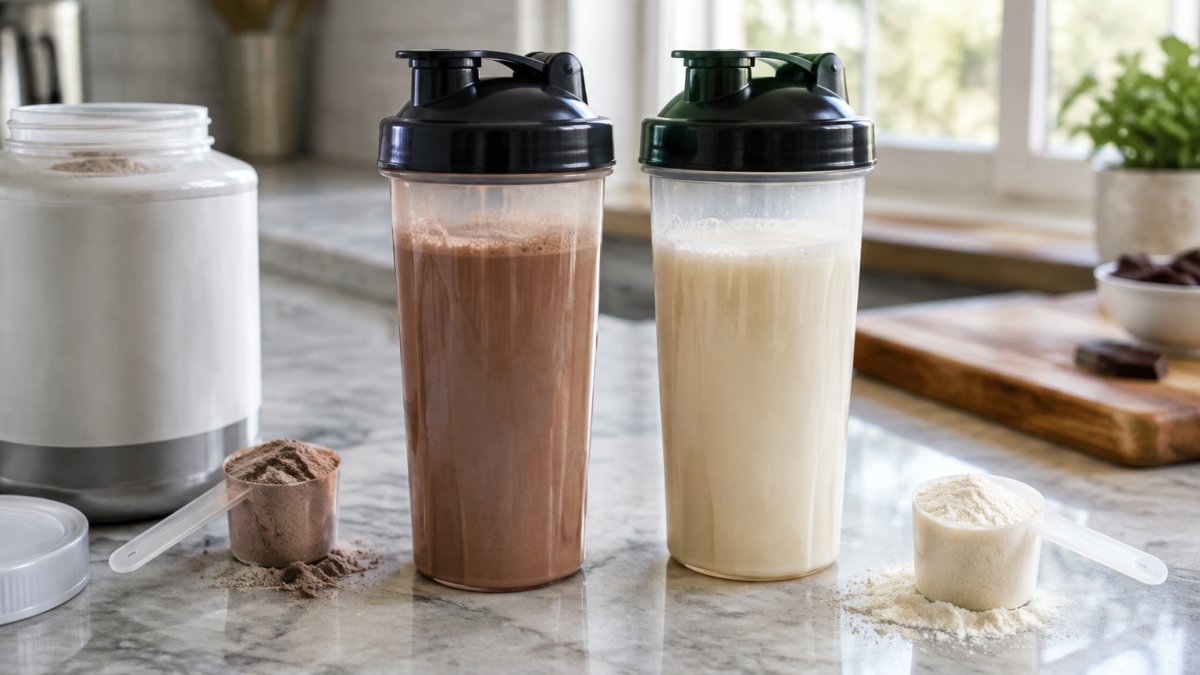
Chocolate vs vanilla whey protein isolate comes down to flavoring, not protein. Both deliver the same protein per serving from the same base ingredient, so the real differences sit in calories, added ingredients, and how you plan to use the powder. At Bionic Supps, we help customers read labels and pick a flavor they will actually finish. Below, we break down what changes between the two, what stays the same, and how to choose with confidence.
Why the Flavor Matters Less Than You Think
Whey protein isolate is a filtered milk protein with most of the lactose and fat removed, leaving a high-protein powder that mixes clear and digests easily. The flavoring added afterward, cocoa or vanilla, is a small part of the tub. What changes is taste, sweetness, and a handful of extra ingredients. That is the whole comparison in one sentence.
Chocolate vs Vanilla Whey Protein Isolate Calories: Reading the Label Side by Side
Calories differ between chocolate and vanilla whey protein isolate because the flavor system, not the protein, carries the extra carbohydrate and fat. Cocoa powder contributes a small amount of carbohydrate and fat per serving, and many chocolate systems add cocoa butter, creamer, or extra sweetener to round out the taste. Vanilla flavoring is typically lighter and often needs less sweetener to taste finished. The result is usually a small gap per serving, but it widens fast when a brand leans on added sugar or creamers in one flavor.
To compare fairly, normalize to the same protein dose. If one label lists 22 g protein per 35 g scoop and the other lists 22 g per 34 g scoop, compare calories per gram of protein, not per scoop. That removes the scoop-size distortion and shows the real cost of flavor.
| What to Compare | Chocolate (example label) | Vanilla (example label) | Why It Matters |
|---|---|---|---|
| Serving size | 35 g | 34 g | Cocoa adds a little powder mass |
| Protein per serving | 22 g | 22 g | Should match across flavors |
| Total calories | Slightly higher | Slightly lower | Driven by cocoa fat and carbohydrate |
| Total carbohydrate | Slightly higher | Slightly lower | Cocoa powder and any added sugar |
| Total fat | Slightly higher | Slightly lower | Cocoa butter or creamer in some chocolate systems |
| Added sugar | Check label | Check label | The biggest calorie swing between flavors |
| Sweetener type | Stevia, sucralose, or monk fruit | Stevia, sucralose, or monk fruit | Affects taste more than calories |
A common pattern is a 5-20 calorie gap per serving between equivalent isolates, but that is not a rule, some chocolate isolates land within a few calories of vanilla, and some vanilla isolates carry more added sugar than the chocolate. The label, not the flavor name, tells you which is which.
Watch out: a chocolate isolate that tastes unusually rich may be using cocoa butter, creamer, or added sugar to get there, which can push calories and fat well above the vanilla version. Read the full ingredient list and the added-sugar line before assuming chocolate is the heavier option.
For a deeper walkthrough of label reading, see our guide on how to read supplement ingredient labels.
Chocolate vs Vanilla Whey Protein Isolate Weight Loss: Which One Fits Your Deficit
For weight loss, the flavor with fewer added calories and less added sugar wins, and that is usually vanilla. Plain vanilla flavoring tends to need less sweetener and no cocoa butter or cocoa fat, so the calorie count stays lower. Chocolate can fit a deficit fine, but only if you check the label for added sugar and treat it as a treat, not a daily staple.
The bigger lever is portion control. Measure your scoops, log the calories, and pick the flavor you will drink without dreading it. A powder you enjoy is a powder you keep using.
Is Chocolate or Vanilla Protein Powder Healthier? Ingredients and Additives Compared
Neither flavor is inherently healthier, flavoring does not change protein quality. What changes is the ingredient system built around the protein: cocoa or vanilla flavoring, the sweetener blend, and any carriers, creamers, or thickeners. Those are the lines that matter for macros, sensitivities, and label trust.
Cocoa, Vanilla Flavoring, and Sweeteners
Chocolate flavors typically list cocoa powder (sometimes labeled cocoa processed with alkali), which brings trace minerals and a richer taste but also a small amount of fat and carbohydrate. Vanilla flavors usually rely on vanilla extract or natural flavoring, which is lighter and often paired with less sweetener. Both may use stevia, sucralose, monk fruit, or a blend; the sweetener choice affects taste and aftertaste more than calories.
Flavor alone does not determine protein quality. The amino acid profile, leucine content, and digestibility come from the whey isolate base, not the cocoa or vanilla. A chocolate isolate and a vanilla isolate from the same base deliver the same protein quality per gram of protein.
Dietary Restrictions and Ingredient Sensitivities
- Dairy: Whey isolate is a milk protein (the FDA). Most of the lactose is removed, but people with a milk allergy should treat any whey isolate as dairy, regardless of flavor.
- Cocoa and caffeine: Cocoa powder contains small amounts of caffeine and related compounds. Most people tolerate it fine, but sensitive sleepers may notice a chocolate shake later in the day.
- Sweeteners: Stevia, sucralose, and monk fruit are common. If you react to one, check the sweetener line, it often differs between flavors within the same brand.
- Additives: Some chocolate systems use creamers, gums, or cocoa butter to improve mouthfeel. Vanilla systems sometimes use more flavoring to compensate for the neutral base. Neither is automatically better; the label tells you what you are getting.
Watch out: some chocolate powders hide added sugar or creamers behind 'chocolate flavor' on the front of the tub. Read the full ingredient list and the added-sugar line, not just the marketing panel.
If you want to buy with confidence, our guide on how to purchase high quality whey protein covers what to look for.
Taste, Texture, and Mixability: A Practical Taste-Test Approach
Taste is personal, so test it like a pro instead of guessing. Mix one scoop of each flavor with the same amount of cold water in separate shakers, shake for the same time, and taste side by side.
- Aroma: Does the chocolate smell like cocoa or like candy?
- Sweetness: Is the vanilla subtle or syrupy?
- Texture: Does either turn gritty or foamy?
- Aftertaste: Any bitter or artificial finish?
- Mixability: Any clumps left in the shaker?
Best Use Cases: Smoothies, Baking, Coffee, and Post-Workout Shakes
Vanilla is the more versatile flavor. It disappears into smoothies, oatmeal, and baked goods and sweetens coffee without clashing. Chocolate shines in dessert-style shakes, banana smoothies, and recipes where you want a rich, bold taste.
- Smoothies: Vanilla for fruit blends, chocolate for banana or peanut butter
- Baking: Vanilla keeps recipes neutral; chocolate works for brownies and muffins
- Coffee: Vanilla stirs in cleanly; chocolate can turn bitter with hot coffee
- Post-workout: Either works; pick the one you will drink daily
For post-workout recovery planning, our guide on post workout recovery supplements pairs well with either flavor.
How to Pick Your Flavor at Bionic Supps
Choose vanilla if you want a neutral base for recipes, or chocolate if you want a richer taste. Either way, check the label for added sugar.
Both of our isolates deliver 22 g of protein per two-scoop serving. If you want the neutral, versatile option, shop the vanilla whey protein isolate. If you want the richer dessert-style shake, shop the chocolate whey protein isolate. Free U.S. shipping applies to orders of $50 or more.


Picking a flavor should not be the hard part of your routine. Start with the one you will actually drink, then build consistency around it. Bionic Supps gives you transparent labels, full ingredient lists, and 12 years of experience helping customers choose with confidence. Get started with Bionic Supps and find the flavor that fits your goals.
Frequently Asked Questions
Does chocolate whey protein isolate have more calories than vanilla?
It can, but not by much. The difference usually comes from cocoa powder and any added flavoring or sweetener. At Bionic Supps, the chocolate isolate uses a 35 g two-scoop serving and the vanilla uses 34 g, and both deliver 22 g of protein. Always compare labels on an equal serving basis rather than assuming one flavor is lighter.
Which flavor is better for weight loss, chocolate or vanilla?
Neither flavor causes or blocks weight loss on its own. What matters is total calories, protein per serving, and whether you actually enjoy drinking it consistently. Pick the flavor you will use daily, keep your overall calorie deficit in place, and check the nutrition label for added sugar. A shake you look forward to is easier to stick with than one you tolerate, and adherence is what drives results.
Is chocolate or vanilla protein powder healthier?
Healthiness depends on the ingredient list, not the flavor name. Chocolate versions include cocoa powder, which adds a small amount of flavor and color compounds, while vanilla versions use vanilla flavoring. Both may contain sweeteners such as stevia. Read the full label, check for added sugar and fillers, and confirm the protein per serving. If you have sensitivities, the ingredient panel tells you more than the flavor does.
Which flavor works better in smoothies and recipes?
Choose based on the recipes you actually make most often.
