

Last Updated: October 25, 2026
Quick Summary
Proprietary supplement blends hide individual ingredient amounts behind a single total weight, making it impossible to verify whether you're getting effective doses or tiny amounts mixed with fillers. This lack of transparency prevents you from assessing safety, checking for drug interactions, or calculating cumulative intake of stimulants.
- Manufacturers can include ingredients at ineffective doses, such as 500 mg of creatine in a 2-gram blend when research shows 5 grams is needed daily.
- Undisclosed stimulant amounts prevent you from calculating total daily caffeine or other stimulant intake across multiple supplements and foods.
- You cannot pinpoint which ingredient caused an allergic reaction or adverse effect when amounts are hidden inside a proprietary blend.
- Manufacturers can legally change ingredient ratios in a blend without updating the label, causing batch-to-batch inconsistency.
- Fully disclosed formulas allow you to verify doses against research, check for medication interactions, and make informed purchasing decisions.
Table of Contents
- What a Proprietary Blend Is and Why It Matters
-
How to Read Supplement Ingredient Labels and Spot Hidden Doses
- Step 1: Find the serving size and servings per container
- Step 2: Separate disclosed ingredients from blend ingredients
- Step 3: Note the total blend weight and divide by the number of ingredients
- Step 4: Compare each disclosed dose to a researched dose range
- Step 5: Check for stimulants and stimulant-like ingredients
- Step 6: Read the "Other Ingredients" line
- Step 7: Check the manufacturer's website for a full label
- The Five Real Risks Behind Proprietary Formulas
- Supplement Facts Label Explained: What Full Disclosure Looks Like
- Why Third-Party Tested Supplements Offer Better Assurance
- Proprietary Blends vs. Fully Disclosed Formulas: A Practical Comparison
- Choosing Supplements You Can Trust
- Frequently Asked Questions
What a Proprietary Blend Is and Why It Matters
A proprietary blend is a mixture of multiple ingredients listed on a supplement label under a single total weight, without disclosing the individual amounts of each ingredient.
The core problem: you can't tell if you're getting an effective dose or a tiny pinch mixed with fillers.
At Bionic Supps, we believe transparency matters.
Manufacturers use proprietary blends for legitimate reasons: to protect their formulas from competitors.
How to Read Supplement Ingredient Labels and Spot Hidden Doses
The Supplement Facts label is your primary tool for evaluating what you're buying. Read it correctly and you'll spot the red flags that signal a proprietary blend hiding weak doses. Learn how to read supplement ingredient labels and identify these warning signs.
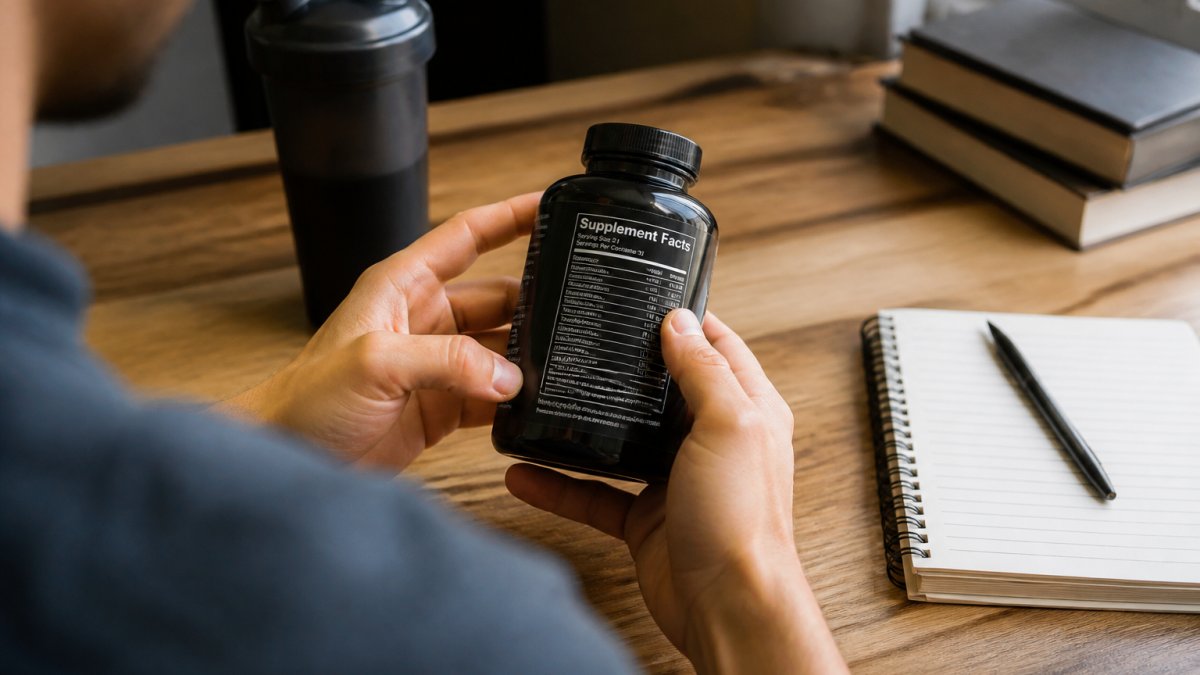
Most label guides stop at "look for the blend." Use this step-by-step checklist to compare products side by side and decide whether a formula is worth your money.
Step 1: Find the serving size and servings per container
The serving size tells you how many capsules, scoops, or grams equal one serving, and everything below applies to that single serving, not the whole bottle. A product listing 2 capsules per serving but selling 60 capsules gives you 30 servings, check whether the price per serving still looks reasonable once you do that math.
Step 2: Separate disclosed ingredients from blend ingredients
Scan the ingredient column. Ingredients with their own amount (for example, "Vitamin D3 50 mcg" or "Creatine Monohydrate 5 g") are disclosed; ingredients grouped under a single weight with an asterisk or the words "proprietary blend" are hidden. A formula where the actives are all inside one blend is a formula you cannot evaluate.
Step 3: Note the total blend weight and divide by the number of ingredients
If a blend lists 2,000 mg total and contains eight ingredients, the average amount per ingredient is 250 mg, and that's the average, not the reality. One ingredient could be 1,800 mg while another is 20 mg. Use the average as a ceiling test: if it's already below the studied dose for the ingredients you care about, the blend almost certainly cannot deliver effective amounts of all of them.
Step 4: Compare each disclosed dose to a researched dose range
For disclosed ingredients, cross-reference the amount against published research. Creatine monohydrate research commonly uses about 5 grams per day; beta-alanine studies often use 3-6 grams daily; citrulline malate is frequently studied at 6-8 grams. If the label shows 2 grams of creatine per serving, the product is underdosed relative to the common research range. Do this for every active you can see.
Step 5: Check for stimulants and stimulant-like ingredients
Caffeine, yohimbine, synephrine, theacrine, and DMHA-type ingredients should be disclosed individually. If they appear only inside a blend, you cannot calculate your total daily stimulant intake. Treat an undisclosed stimulant as a hard stop if you are sensitive to stimulants, pregnant, or managing a cardiovascular condition.
Step 6: Read the "Other Ingredients" line
This line lists non-nutrient additives: binders, capsule material, flavorings, sweeteners, and preservatives. It is not part of the proprietary blend, but it matters if you have allergies or sensitivities. Look for additives you want to avoid and note whether the manufacturer discloses them clearly.
Step 7: Check the manufacturer's website for a full label
Some companies publish a complete Supplement Facts panel online even when the bottle uses a blend. If the website shows the same blend with no individual amounts, the secrecy is intentional; if it shows full doses, ask why the bottle doesn't.
Watch for these red flags as you go:
- A blend listed with no individual ingredient amounts
- Vague ingredient names ("proprietary herbal complex" instead of specific plant names)
- Stimulant-containing blends where individual caffeine or other stimulant amounts aren't disclosed
The Five Real Risks Behind Proprietary Formulas
Proprietary supplement blends carry genuine safety and efficacy risks. Understanding these five dangers helps you decide whether to trust a product.
Underdosing of Key Ingredients
The most common problem with proprietary blends is that manufacturers can include just enough of an active ingredient to list it on the label while providing far too little to produce results, cheaper than using effective doses.
Research shows what doses actually work: creatine monohydrate needs around 5 grams daily, beta-alanine 3-6 grams, citrulline malate 6-8 grams. If a proprietary blend lists these ingredients but doesn't disclose amounts, you could be getting 500 mg of creatine in a 2-gram blend, only 10% of an effective dose.
Hidden Stimulant Amounts, Cumulative Intake, and Interaction Risks
Stimulant-containing supplements pose a specific danger when doses aren't disclosed. Caffeine, yohimbine, synephrine, and other stimulants can cause jitteriness, elevated heart rate, anxiety, and sleep disruption.
The bigger problem is cumulative intake.
Stimulant interactions also matter. Some combinations amplify effects in unpredictable ways. Without knowing exact amounts, you can't assess whether combining supplements is safe for you.
Lack of Transparency for Safety Assessment
Safety assessment requires knowing what you're consuming and in what amounts. Proprietary blends prevent this entirely.
If you have an allergic reaction or adverse effect, you can't pinpoint which ingredient caused it. If you're taking medications that interact with supplements, you can't check for conflicts when amounts are hidden, and people with sensitivities have no way to verify an ingredient is absent from a proprietary blend.
This opacity also makes it harder to report safety issues to regulators or warn others about a specific product.
Inconsistent Product Quality Across Batches
Manufacturers can legally change the ratio of ingredients in a proprietary blend without updating the label, as long as the total blend weight stays the same.
The supplement you buy this month might perform differently than last month's, even though the label looks identical, and you have no way to know if batch variation is affecting your results.
Difficulty Verifying Manufacturer Claims
Without disclosed ingredient amounts, you can't verify a manufacturer's claims about their formula. They might claim "premium doses" or "scientifically formulated amounts," but you have no way to check.
Some manufacturers make inflated claims about what their proprietary blends do, and without transparency consumers have limited recourse, you're trusting the company's word rather than verifying it yourself.
Supplement Facts Label Explained: What Full Disclosure Looks Like
A properly formatted Supplement Facts label shows each ingredient with its individual amount. This is the gold standard for transparency.
Here's what you're looking for:
- Nutrient name and the amount per serving (in grams, milligrams, or IUs)
- % Daily Value where applicable (for vitamins and minerals with established daily targets)
- Other ingredients listed separately at the bottom (these are non-nutrient additives like binders, capsule material, or flavorings)
When every ingredient is individually listed with its dose, you can:
- Compare the formula to research and see if doses are effective
- Calculate your total daily intake if you're taking multiple supplements
- Identify potential interactions with medications or other supplements
FDA's guidance on dietary supplement labeling outlines the legal requirements for supplement labels. Full disclosure isn't optional, it's the standard that responsible manufacturers follow.
Why Third-Party Tested Supplements Offer Better Assurance
Third-party testing means an independent laboratory verifies that a supplement contains what the label claims and is free from contaminants.
This adds a layer of verification that proprietary blends can't provide. Even with disclosed ingredients, third-party testing confirms they're actually present in the amounts stated.
Third-party testing organizations like NSF International and USP (U.S. Pharmacopeia) are independent from manufacturers.
When shopping, look for third-party testing certifications on the label or the company's website, one way to add confidence even when a formula isn't fully transparent. Learn more about how third-party testing works to understand what verification actually protects you.
Proprietary Blends vs. Fully Disclosed Formulas: A Practical Comparison
The choice between proprietary and transparent formulas comes down to what you can verify and control.
| Factor | Proprietary Blend | Fully Disclosed Formula |
|---|---|---|
| Ingredient transparency | Hidden amounts | Each ingredient listed with dose |
| Dose verification | Impossible | Can compare to research |
| Safety assessment | Limited | Can check for interactions |
| Batch consistency | Can vary | Standardized |
| Price | Often cheaper | Usually costs more |
| Trust required | High | Low |
Proprietary blends cost less upfront because manufacturers save money on smaller doses and less quality control.
For most people, the extra cost of a transparent formula is worth it. You're paying for a product that's more likely to work and safer to use.
Choosing Supplements You Can Trust
Start by looking at the label. If you see a proprietary blend with no individual ingredient amounts, ask yourself: Would the manufacturer hide this information if they had something to be proud of?
Responsible supplement companies disclose their formulas because they're confident in the doses and quality, and they want you to verify their claims.
When evaluating a supplement, use this checklist:
- Check for individual ingredient amounts on the label
- Verify doses against published research for that ingredient
- Look for third-party testing certifications
Bionic Supps makes this easier by showing complete ingredient lists and full Supplement Facts labels for every product, you deserve to know exactly what you're buying. Browse our transparent fitness supplement brands guide to see examples of formulas with full disclosure.
Products like our Brain & Focus Formula list every ingredient with its amount, so you can verify the doses match research and decide if it fits your needs.

Frequently Asked Questions
What is a proprietary blend in a dietary supplement?
A proprietary blend is a combination of ingredients listed on the Supplement Facts label as a single total weight, without disclosing the individual amounts of each ingredient. For example, a blend might say 'Proprietary Energy Blend 500 mg' containing caffeine, L-theanine, and taurine, but you won't know how much of each is actually in that 500 mg. Manufacturers use proprietary blends to protect their formulas as trade secrets, but this lack of transparency makes it impossible for consumers to assess whether doses are effective or safe.
How can I tell how much of each ingredient is in a proprietary blend?
You cannot determine individual ingredient amounts from a proprietary blend label alone. The only way to get this information is to contact the manufacturer directly and ask for the full formula breakdown. Some transparent supplement companies voluntarily disclose all ingredient amounts on their labels or websites. When evaluating a supplement, look for products that list each ingredient separately with its dose in milligrams or grams, rather than grouping them under a proprietary blend. This transparency lets you verify whether doses match evidence-based research.
Are proprietary blends safe to take?
Proprietary blends carry safety risks because hidden ingredient amounts make it impossible to assess cumulative intake, especially with stimulants like caffeine or synephrine. If you use multiple supplements containing proprietary blends, you could exceed safe daily limits without knowing it. The risk is higher for people taking medications, those with heart conditions, or those sensitive to stimulants. Third-party tested supplements with full ingredient disclosure offer better assurance. Always read the label, check for allergen warnings, and consult a healthcare provider if you're taking medications or have health concerns.
What should I look for instead of a proprietary blend?
Look for supplements with a fully transparent Supplement Facts label that lists every ingredient and its exact amount in milligrams or grams. Choose products that are third-party tested by organizations like NSF International or USP, which verify that the label matches what's actually in the bottle. Check that the manufacturer discloses their sourcing and quality standards. Bionic Supps, for example, provides full Supplement Facts labels for all products, allowing you to see exactly what you're getting. Compare ingredient amounts against published research to ensure doses are evidence-based, not token amounts.
The supplement industry relies on trust. Proprietary blends test that trust by hiding information you need to make a safe, informed choice. When you understand the risks, you can demand better, and choose brands that deliver the transparency you deserve.
