

Last Updated: November 8, 2026
Quick Summary
To choose supplements with fewer fillers, read the Other Ingredients line on the Supplement Facts panel before the front label and count the items. Compare products by serving size, active dose, filler count and type, testing proof, and cost per effective serving rather than bottle price. Flag cosmetic additives like titanium dioxide and FD&C dyes, but keep functional excipients in small amounts.
- Read the Supplement Facts panel top to bottom, ending with the Other Ingredients line where fillers live.
- Compare price per serving, not price per bottle, since serving sizes vary across brands.
- Titanium dioxide and FD&C dyes add no nutritional value and are the easiest additives to avoid.
- Third-party seals verify a batch, so look for a named lab or certificate of analysis.
- Check the Contains statement and facility note for allergens before buying any filler-light product.
Table of Contents
- Why Filler Count Matters More Than Marketing Claims
- How to Read a Supplement Facts Panel in 60 Seconds
- Bad Fillers in Supplements: What to Flag and What to Ignore
- Is Rice Powder in Supplements Bad for You?
- How to Choose a Supplement Brand Without Guesswork
- Best Supplement Brands Third-Party Tested: What the Seals Verify
- Allergy, Intolerance, and Dietary-Restriction Checks Before You Buy
- Compare Two Labels Side by Side Before You Add to Cart
- Frequently Asked Questions
Why Filler Count Matters More Than Marketing Claims
Learning how to choose supplements with fewer fillers starts with one habit: reading the back of the bottle before you read the front, where fewer fillers are listed. The front label sells a promise. The ingredient list tells you what you actually swallow.
Shoppers are often burned by bold claims and thin formulas. A label can say "pure" and still pack in binders, flow agents, and artificial colors. None of those extras help you build muscle or recover faster.
Here is the part most guides skip. Fillers are not automatically evil. Some keep a powder from clumping or a capsule from cracking. The goal is fewer unnecessary fillers, not zero additives at any cost.
Below, we walk through seven steps.
How to Read a Supplement Facts Panel in 60 Seconds
A Supplement Facts panel is a standardized table that lists serving size, active ingredients with amounts, and "Other Ingredients." Reading it in order, top to bottom, tells you most of what you need.
Here is the fast version:
- Find the serving size. One scoop, two capsules, three tablets? Everything else depends on this number.
- Check servings per container. A big tub with a big scoop may hold fewer doses than you think.
- Scan the active amounts. These are the ingredients doing the work.
- Read the Other Ingredients line. This is where fillers live.
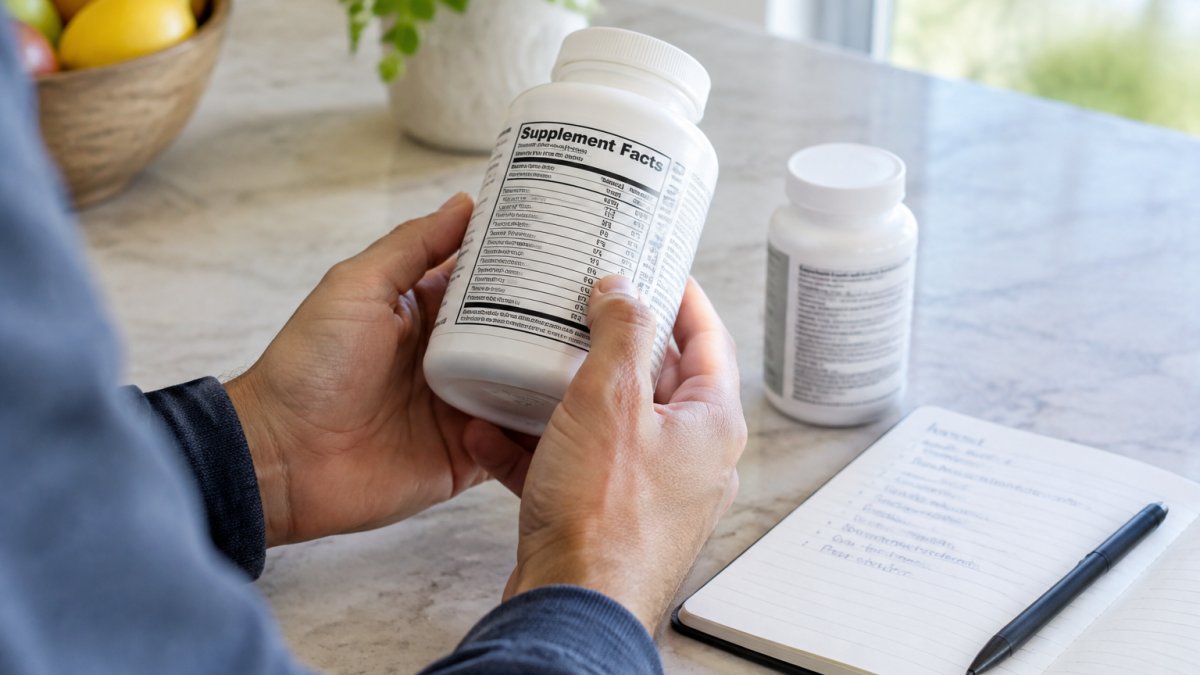
Serving Size, Ingredient Amount, and What the Numbers Actually Mean
The serving size is the amount you must take to get the listed dose. That sounds obvious until you hit a label where three capsules equal one serving.
A common mistake is comparing two products by price per bottle. Compare price per serving instead. A cheap bottle you finish in ten days is not cheap.
For a deeper walkthrough of decoding ingredient names, see our guide on how to read supplement ingredient labels.
The Other Ingredients Line: Where Fillers Hide
Other Ingredients is the list of everything in the product that is not an active nutrient. It includes excipients like binders, flow agents, and coatings.
This line is short on good labels and long on cheap ones. Count the items. A three-item list is easier to audit than a fifteen-item one.
Bad Fillers in Supplements: What to Flag and What to Ignore
Bad fillers in supplements are the ones that add nothing to the formula and exist only to cut cost or speed up production.
The useful frame is function first, then dose, then necessity.
Here is a practical glossary of the excipients you will actually see, what each one does, and when it deserves a second look.
Magnesium stearate. A flow agent and lubricant that keeps powder from sticking to tablet presses and capsule-filling equipment (EFFECT OF MAGNESIUM STEARATE CONCENTRATION ON DISSOLUTION PROPERTIES OF RANITIDINE...).
Silicon dioxide. An anti-caking agent that absorbs moisture and keeps powders free-flowing.
Cellulose (microcrystalline or powdered). A plant-based binder and bulking agent.
Dicalcium phosphate. A tablet binder and source of calcium and phosphorus.
Croscarmellose sodium. A disintegrant that helps tablets break apart in the stomach so the active ingredient can be absorbed.
Stearic acid. A fatty acid used as a lubricant and binder. It is functional in small amounts.
Titanium dioxide. A whitener used to make tablets and capsules look uniform and opaque.
FD&C dyes (Blue 1, Red 40, Yellow 5, and similar). Artificial colors used to make products visually distinctive.
Artificial flavors and sweeteners (sucralose, acesulfame potassium, aspartame). Used in flavored powders and chewables to mask the taste of active ingredients.
Hydrogenated oils. Used in softgels and some chewables as a carrier or to improve texture and shelf stability.
Rice powder, maltodextrin, and dextrose. Cheap bulking agents and carriers. A small amount can be functional in a powder.
Gelatin and pullulan. Capsule shell materials. Gelatin is animal-derived; pullulan is plant-derived.
Watch out: A short ingredient list is not automatically better.
Proprietary blends deserve their own warning. Our article on hidden risks in proprietary supplement blends explains why that matters.
Is Rice Powder in Supplements Bad for You?
Rice powder is generally considered a common carrier and anti-caking agent in some formulas.
The real issue is quantity and honesty. Rice powder is cheap, so some brands use it to bulk up a powder while cutting the active ingredient. A little is functional. A lot is a cost-cutting move.
Watch out for shoppers with celiac disease or gluten sensitivity. Rice itself is gluten-free, but cross-contact during manufacturing is possible. Check for a gluten-free statement if that applies to you.
If you are avoiding grains for dietary reasons, look for products that use cellulose or silica instead. The label will tell you.
How to Choose a Supplement Brand Without Guesswork
How to choose a supplement brand comes down to three checks: transparent dosing, a short ingredient list, and proof of testing. A brand that shows all three is usually worth your money.
Start with the product page. Does it show the full label, or just a pretty photo? Bionic Supps product pages include full labels, ingredients, and directions, so you can compare before you buy.
Next, look for clear dosing. "Proprietary blend" is a dodge. A stated milligram amount per active ingredient is a green light. Our breakdown of the benefits of transparent ingredient dosing covers why this single factor filters out most weak brands.
Then check the ingredient list length. Fewer items means fewer places for a problem to hide. It also means fewer things to react to.
Best Supplement Brands Third-Party Tested: What the Seals Verify
Third-party testing means an outside lab checks a product for potency and contaminants, independent of the brand. The best supplement brands third-party tested will show that seal or certificate clearly.
But seals are not magic. They verify a batch, not every bottle forever. Look for:
- The testing lab's name, not just a logo
- A certificate of analysis you can request
- Testing for heavy metals and microbials, not just potency
What seals do not verify: whether the dose is effective for you, or whether the formula suits your goals. That is still your call. For a full walkthrough, read what third-party supplement testing actually verifies.
Allergy, Intolerance, and Dietary-Restriction Checks Before You Buy
Allergen checks are the step people skip, and it is the one that matters most if you have a restriction. Read the "Contains" statement and the facility note.
Check for these common triggers:
- Milk, soy, wheat, egg, and tree nuts
- Gelatin capsules if you avoid animal products
- Gluten cross-contact in powders
- Artificial sweeteners if you are sensitive
A product can be filler-light and still be wrong for you. Do both checks.
Compare Two Labels Side by Side Before You Add to Cart
Side-by-side comparison is where everything clicks. Take two products for the same goal and line up five things: serving size, active dose per serving, Other Ingredients count and type, testing proof, and cost per effective serving. Most shoppers stop at the first two.
Here is the comparison frame:
| Check | Strong Label | Weak Label |
|---|---|---|
| Serving size | Clearly stated, realistic | Buried or confusing |
| Active dose | Exact mg per ingredient | Hidden in a blend |
| Other Ingredients | Short, functional list | Long, includes dyes and sweeteners |
| Testing | Named lab or certificate of analysis | Logo only |
| Cost per effective serving | Calculated from servings per container | Compared by bottle price |
A worked example makes this concrete. Compare two creatine products. Product A is an unflavored creatine monohydrate powder: one active ingredient, 5,000 mg per scoop, 50 servings per container, and an Other Ingredients line that lists nothing or only silicon dioxide.
Run the five checks. Product A wins on active dose clarity, Other Ingredients length, and cost per effective serving once you divide the bottle price by 50. Product B may win on taste, which is a legitimate preference, but it loses on transparency and on how much of what you are paying for is actually creatine.
Now compare two magnesium products. Product A states 275 mg of elemental magnesium per three-capsule serving from magnesium glycinate, with a short Other Ingredients line and a pullulan capsule shell. Product B states a proprietary blend of magnesium sources with no elemental amount, uses magnesium stearate and titanium dioxide, and does not disclose the capsule material.
That is the bioavailability and value angle most guides miss. A shorter ingredient list is not automatically better value if the active dose is lower, the form is poorly absorbed, or the serving size is unrealistic. Compare cost per effective serving, not cost per bottle.
Watch out: Serving sizes are not standardized across brands. One product may deliver its dose in one capsule and another in three. Always normalize to a single serving before comparing price or active amount, or you will compare the wrong numbers.
Our Creatine Monohydrate keeps it simple: 5,000 mg of creatine monohydrate per scoop, 50 servings per container, and a full Supplement Facts label on the page. If you want a clean-label walkthrough before buying, our clean-label creatine buying guide breaks it down step by step.

For daily wellness, our Magnesium Glycinate states 275 mg of elemental magnesium per three-capsule serving, and our Ashwagandha comes in pullulan capsules with a simple formula. All three let you run the five-check test in under a minute.


The hardest part is not reading labels. It is trusting that the label matches the bottle.
Frequently Asked Questions
Are fillers in supplements always harmful?
No. Many excipients serve a real function: binders hold tablets together, flow agents keep powder from clumping, and coatings protect ingredients from moisture. The issue is unnecessary or poorly disclosed additives, such as artificial colors used only for appearance. Read the Other Ingredients line and ask whether each item is doing a job your body benefits from. A short list of functional excipients is not a red flag; a long list of decorative additives is worth questioning.
How can I tell whether a supplement contains unnecessary fillers?
Start with the Other Ingredients line below the Supplement Facts panel. Flag artificial colors, artificial flavors, and preservatives that exist only for shelf appearance. Then compare the number of inactive ingredients to the number of active ones. A product with one active ingredient and eight inactive ones is worth a closer look. Also check whether the label discloses the full ingredient list or hides behind a proprietary blend, which makes it harder to spot bad fillers in supplements.
Is rice powder in supplements bad for you?
Rice powder and rice flour are common flow agents and carriers in some formulas. The real concerns are three: people with celiac disease or gluten sensitivity should confirm the rice is not cross-contaminated with wheat; rice can carry trace heavy metals depending on its source, which is why third-party testing matters; and rice powder adds carbohydrate volume that dilutes the active ingredient per scoop. Check the serving size to see how much of the scoop is actually the nutrient you want.
What does third-party testing tell you about a supplement?
Third-party testing means an outside lab, not the manufacturer, verified something specific: ingredient identity, potency compared to the label, or absence of contaminants like heavy metals and microbes. Seals such as NSF Certified for Sport or USP Verified signal that a program checked the product. What testing does not guarantee is that the formula works for your goals or that every batch is tested. Ask which batches are covered and whether the certificate of analysis is available on request.
